
Count the systems a project manager on a mid-size mechanical job touches before lunch. Procore for the RFI log. The accounting system for committed costs. Outlook for the thread where the GC's super mentioned the schedule slip. SharePoint for the drawing set. The subcontract itself, a PDF somewhere, for the notice language that determines whether that slip is your problem or theirs. Five systems, five logins, five different ideas of how search should work, and the question that started the whole hunt was one sentence long.
That gap, between how a PM asks a question and how software expects to be asked, is the entire reason Emerald's Project Manager Agent exists.
What natural language processing actually buys you
Strip the jargon and natural language processing (NLP) means one thing here: the system reads your question the way a colleague would, not the way a database does. "What's at risk across my projects this week?" is not a query any traditional construction platform can execute. It has no project filter, no date range, no module selected. A person hearing it knows instantly what's being asked, deadlines, blockers, exposure, near-term, all jobs. This all starts with the Full Workflow mode on Emerald's chat page.
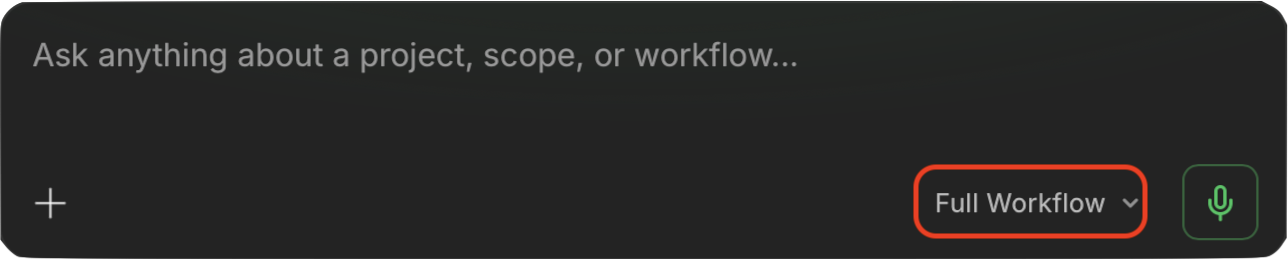
The agent does the same decomposition automatically. It reads the question, works out which project or projects it concerns, decides which sources bear on it, the contract, the submittal log, the RFI register, the change order file, the email trail, pulls what's relevant, and answers in plain language with the source cited. Ask about the markup cap on a specific job and it returns the number, the article, and the section, because the answer to a contract question is only worth having if you can see where it came from.
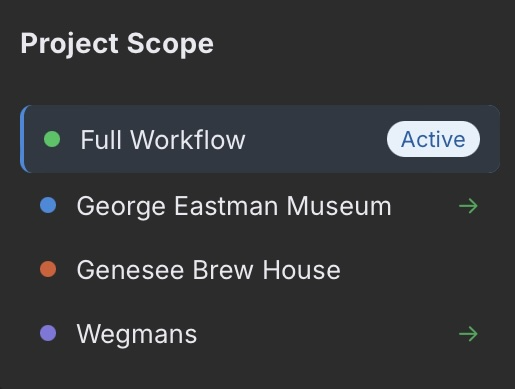
The routing is the part that's easy to miss and hard to build. You don't tell the agent which project you mean; it resolves that from the question itself. Name the job, mention the GC, reference the building, any of these lands you in the right place. Ask a follow-up and it stays there. Ask about a different job mid-conversation and it switches, silently, without a form or a dropdown. The workflow moves at the speed of the conversation because the conversation is the workflow.
The singular terminal
The practical consequence is that the whole stack collapses into one place to type. Not because the systems underneath went away, Procore is still Procore, the inbox is still the inbox, but because the agent sits across all of them and does the fetching. One question can draw on the subcontract, three emails, and the submittal log simultaneously, and the PM never sees the seams.
That matters more than it sounds like it should, for a reason every contractor already knows: the information that prevents a problem is usually spread across systems that don't talk. The notice deadline lives in the contract. The event that triggered it lives in an email. The cost of missing it lives in the change order file. A PM who checks any one system sees nothing wrong. The agent, reading across all three, sees a clock running.
And because asking costs nothing, no navigation, no export, no twenty-minute reconstruction, questions get asked that previously didn't. Nobody opens five systems to satisfy a hunch. Everybody types one sentence.
The measure that matters
The test for a tool like this isn't the demo. It's whether the questions that used to take twenty minutes now take ten seconds, and whether the ones that never got asked at all now get asked daily. A PM running eight jobs doesn't need another dashboard. They need the answer, the source, and their afternoon back.
One terminal. Plain language in, cited answers out, the right project every time. The stack is still there, you just stop visiting it.